
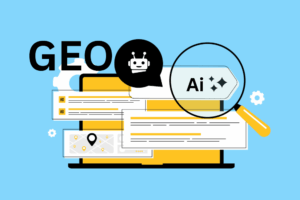
 SEO is changing again. Ranking for keywords alone is no longer enough, and businesses that rely on search traffic need to adapt to how people are actually finding information today. One of the biggest shifts shaping search right now is GEO, which stands for Generative Engine Optimization.
GEO focuses on making sure your website content can be clearly understood, interpreted, and used by AI driven search experiences. Traditional SEO was built around keywords and rankings. GEO adds another layer by ensuring your content is usable by AI tools that are increasingly answering questions directly for users.
People Are Starting Searches With AI
Search behavior is shifting faster than many businesses realize. According to a recent Search Engine Land study, 37 percent of consumers now start their searches using AI tools instead of traditional search engines like Google.
This means a growing number of people are not beginning their research by scrolling through search results. They are asking AI platforms for answers first and using those responses to guide decisions. If your business is not being referenced or summarized by AI, you may be missing visibility before a potential customer ever reaches a search engine results page.
AI Usage Continues to Grow Rapidly
AI adoption is no longer limited to early adopters or tech focused industries. According to data summarized by National University, AI usage has grown significantly across consumer devices, workplaces, and digital platforms. Millions of people interact with AI daily through phones, assistants, search tools, and productivity software.
As AI usage increases, more discovery happens through summaries, recommendations, and direct answers. Businesses need to recognize that AI is now a gatekeeper between users and information. Being invisible to AI means being invisible to a portion of your audience.
What This Means for SEO in 2026
SEO in 2026 is not just about ranking. It is about being understood and trusted by systems that summarize information for users.
AI favors content that is clear, well structured, and written in natural language. Pages that explain who you are, what you do, and who you help in a straightforward way are more likely to be used when AI generates answers.
If AI cannot confidently interpret your content, it will choose another source. That decision often happens before a user ever sees a traditional search result.
Why Website Clarity and Structure Matter More Than Ever
AI does not read websites the way humans do. It relies on structure, hierarchy, and consistency to determine meaning. This makes proper headings, organized content, and consistent messaging critical.
Your website should clearly state your services, locations, and value proposition. It should avoid vague language and overly clever copy that hides meaning. When AI can easily understand your site, it is more likely to reference your business when answering questions.
This is where GEO supports SEO. Strong structure and clarity help both traditional search engines and AI driven platforms interpret your content correctly.
SEO Is Not Dead. It Is Evolving.
The rise of AI does not mean SEO no longer matters. It means SEO now includes how your content is summarized, referenced, and surfaced by AI.
Traditional rankings still matter, but they are no longer the only entry point. Many users now rely on AI answers to narrow choices or validate decisions before clicking through to a website. If your business is not part of that early discovery stage, you are at a disadvantage.
The Bottom Line
GEO is not replacing SEO. It is expanding it.
In 2026, a strong SEO strategy means ensuring your website is readable by AI, trusted as a source, and clear enough to be used in summaries and recommendations. Businesses that adapt to this shift will maintain visibility as search behavior continues to evolve.
If you are unsure whether your website is structured in a way AI can understand or whether GEO should be part of your SEO strategy, that is a smart conversation to have now. Contact Moxie Digital about your website and SEO strategy. We will help you understand where you stand, what needs to change, and how to make sure your business shows up no matter how people start their search.