
 Search used to be simple. You typed a query, saw a list of blue links, and clicked the one that looked best. Now AI is changing how results show up and how users interact with them. If your SEO strategy still assumes people will click through like they always have, it may already be falling behind.
What AI Results Are and How to Spot Them
More often now, especially when you search for questions or general information, you will see a summary at the top of the results page instead of a list of websites.
These are AI generated summaries.
They usually show up as a short paragraph or bulleted list that answers the question directly. Sometimes there are a few source links included, but not always. When the result looks more like an explanation than a traditional search result, you are looking at AI driven content.
If you do not need to click a website to get your answer, that is the biggest sign.
Why Google Is Grouping Websites to Create AI Summaries
Instead of pulling a snippet from one page like featured snippets used to do, AI now scans and combines information from multiple websites.
It looks for content that is clear, structured, authoritative, and helpful. Pages with strong headings, concise answers, FAQs, and topic depth tend to perform better. Credibility also plays a much bigger role than before.
Google is essentially deciding which websites are trustworthy enough to help train and support its summaries. The summary becomes the main product, while websites become supporting sources.
This means your content may still be ranking well but receiving far less visibility than before.
How This Is Impacting Organic Traffic
This shift is having a real and measurable impact on organic traffic.
When AI answers the question directly, fewer users click through to websites. Even if your page is ranking first, users may never scroll far enough to see it.
Many informational sites are already seeing declines in organic traffic, especially for top funnel content like definitions, guides, and basic how to articles. The biggest challenge is that traffic can drop even when rankings stay the same.
Being number one no longer guarantees being seen.
How SEO Strategies Are Changing Because of AI
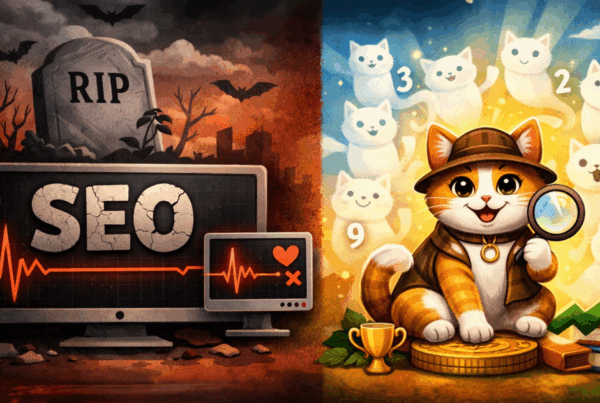
SEO is not dead, but it is absolutely evolving.
Ranking for keywords is no longer enough. The goal now is to become a trusted source that AI wants to reference and users still want to visit.
That requires a few important shifts.
First, content depth matters more than ever. Thin blog posts written just to target keywords are much less effective. AI prefers comprehensive, clearly organized content that truly answers questions.
Second, authority extends beyond backlinks. Brand mentions, visibility across the web, citations in trusted publications, and consistent messaging all help establish credibility.
Third, structure is critical. Content that uses clean headings, FAQs, concise explanations, and logical flow is easier for both AI and humans to understand.
Finally, traffic sources need to diversify. Relying only on organic search is riskier than it used to be. Email, social, branded search, and direct traffic all matter more in an AI driven search environment.
The Big Picture
Search is no longer just about blue links. AI is becoming the front door.
That can feel frustrating, especially if you have invested years into strong SEO. But it also rewards businesses that focus on real expertise, clarity, and usefulness instead of shortcuts.
The brands that adapt will still win attention, trust, and engagement. The ones that do not will slowly lose visibility without fully understanding why.
SEO is not disappearing. It is just growing up.
Wondering whether your content is helping AI summarize the web or getting skipped entirely?
Chat with us about your SEO strategy and we will tell you what is working, what is holding you back, and how to adjust before the drop shows up in your reports.
P.S. This blog article was written with the help of AI!